

A Living Language in Motion The French language is no longer a static monument; it is a breathing, evolving entity shaped by migration and music. What started in the 11th arrondissement or the streets of Abidjan is now dominating global charts and official dictionaries.
From “Wesh” to the Dictionaries
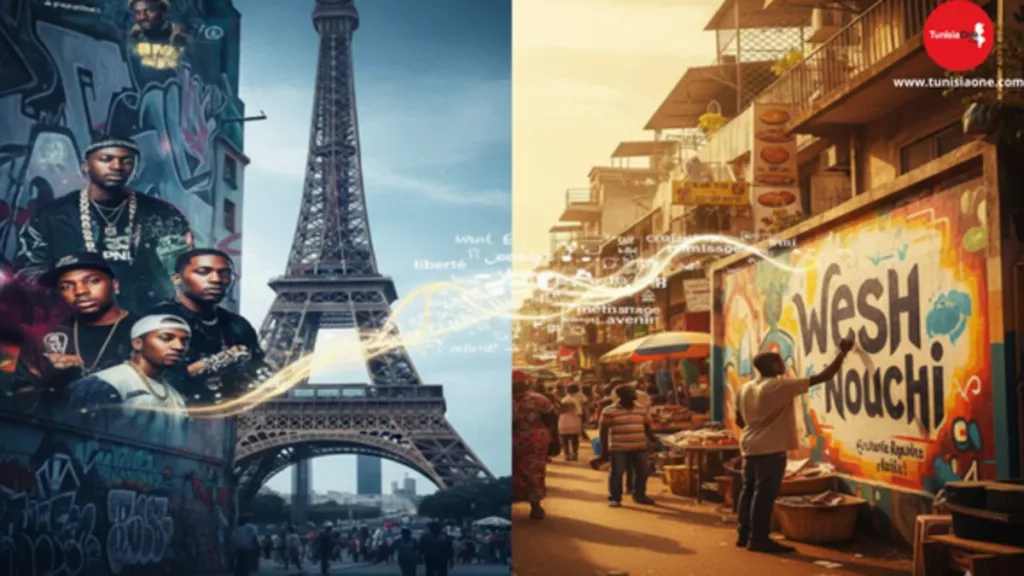
“Wesh,” a term derived from North African Arabic (Darija), has traveled from the marginalized suburbs (Banlieues) to the pages of the prestigious Le Robert dictionary. It’s a linguistic bridge. When London’s Central Cee asks “Why she keep saying wesh?” in his hit Bolide Noir, he is witnessing the power of a vernacular that has bypassed borders.
The Hybrid Identity of French Rap
For artists like PNL or Kery James, language is a tool for belonging. By mixing Verlan (back-slang) with Arabic and Romani words, they’ve created a “vernacular” that communicates their complex, multiethnic identities. As researcher Justine Noyer notes, this hybrid language allows descendants of immigrants to finally construct positive, diverse identities.
Is French an African Language?
With over 50% of French speakers residing in Africa, the continent has become the primary laboratory for linguistic innovation. In Abidjan, “Nouchi” slang—a mix of French and local languages—has given birth to global terms like “S’enjailler.” Today, French is not just a colonial legacy; for many, it is simply an African language.
Aya Nakamura: The New Face of Francophonie
Aya Nakamura’s performance at the Paris 2024 Olympics was a watershed moment. Her lyrics, blending West African influences and urban slang, represent the “Plural French.” As linguists point out, a language that constantly generates new vocabulary is a healthy language, and the future of French lies in its ability to embrace this diversity.