


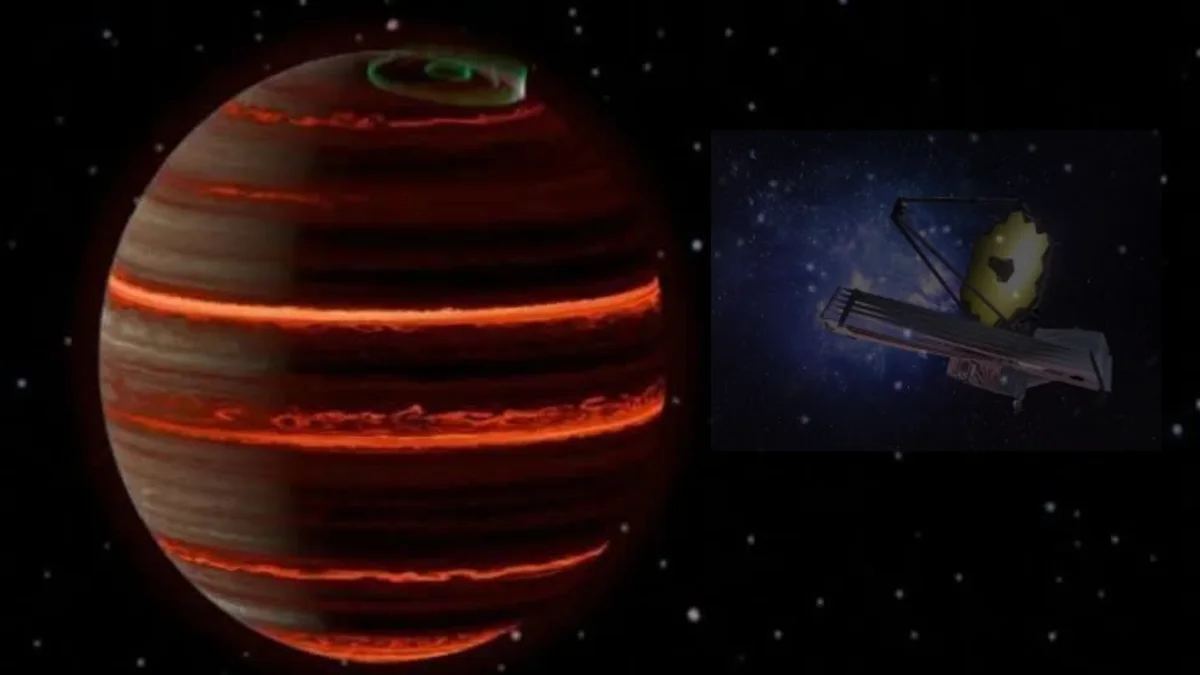
The Discovery of a “Lonely World” In a groundbreaking astronomical feat, the James Webb Space Telescope (JWST) has captured unprecedented atmospheric data from a “Rogue Planet”—a world that wanders through the cosmos without orbiting a parent star. This discovery is a paradigm shift, proving that even in the absence of starlight, planets can host violent and energetic weather systems.
Auroras: The Ghostly Heat Source One of the most shocking findings is the planet’s unexpected thermal signature. Usually, rogue planets rely on residual internal heat. However, JWST revealed that Intense Auroras are pumping massive amounts of energy into the upper atmosphere. These auroras, triggered by interactions with the interstellar medium or the planet’s own complex magnetosphere, act as a primary power source, heating the world in total darkness.


A 3D Look at Alien Storms Using advanced 3D Spectroscopy, scientists identified significant thermal variations across the planet’s atmosphere. This suggests the presence of massive, Jupiter-like storms—similar to the Great Red Spot—that transport heat from the interior to the surface. The planet is not a cold, dead gas ball, but a raging, dynamic world of shadows and light.
Conclusion: Rewriting Planetary Science This JWST mission provides the first deep glimpse into “lonely” worlds. By understanding how these planets generate heat and weather without a sun, astronomers are adjusting their models for exoplanets across the galaxy, opening new doors to the possibility of life sustained by internal energy rather than starlight.