


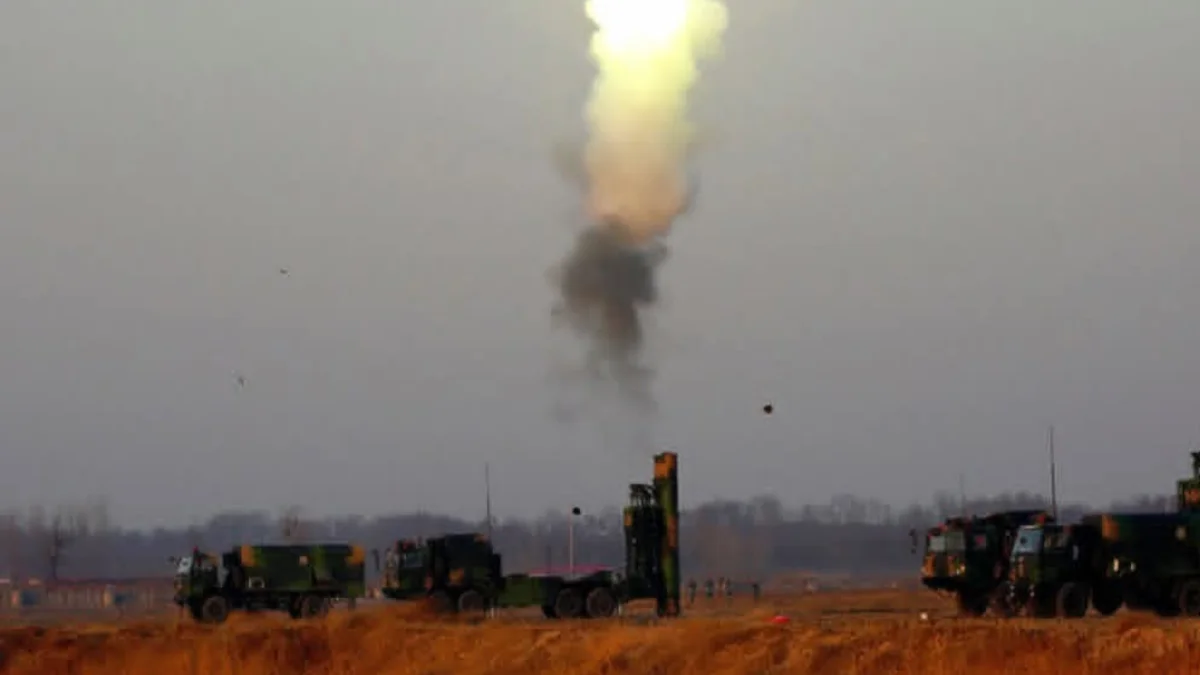
A New Balance of Power The burgeoning military partnership between Egypt and China has triggered widespread concern across the Middle East. Reports suggesting that Cairo is deploying advanced Chinese weaponry near the Israeli border have raised serious questions about the strategic implications and future intentions in the region.
Diversifying Defense: Beyond Traditional Alliances In a clear move to reduce its historical dependence on the United States, Egypt is pursuing a “Multi-Polar” defense policy. While maintaining its 1979 peace treaty with Israel, Cairo is upgrading its capabilities to face complex regional challenges, from the instability in Libya to the Grand Ethiopian Renaissance Dam (GERD) crisis.
مقالات ذات صلة / Related Posts
 Alerte Météo : Jusqu’à 100 mm de pluie en Tunisie, 8 gouvernorats en Vigilance Orange
  Le sens du timing : Le Hamas prêt à libérer tous les otages vivants lors de la visite de Donald Trump
  Iran and Israel: Are We Approaching the “Final Conflict”? Global Powers Mobilize in the Middle East
  The Drums of Ground War: Israel Intensifies Pressure on Trump for Military Decisiveness in Iran
The Chinese Arsenal: A Threat to Air Superiority? According to recent intelligence reports, Egypt has acquired several game-changing Chinese systems:
- HQ-9 Air Defense System: A formidable rival to the American Patriot.
- Wing Loong Attack Drones: Providing high-precision strike capabilities.
- Anti-ship Missiles & Cyber Warfare Suites: Modernizing Egypt’s electronic and maritime defense. Israel views these acquisitions—especially if stationed in the Sinai Peninsula—as a qualitative shift that could challenge its long-held regional air superiority and freedom of operation.
Global Impact: Washington vs. Beijing The United States is watching this realignment with deep caution. Washington fears that China’s growing footprint in Egypt could undermine American influence in a cornerstone regional state. Analysts believe this cooperation serves dual purposes: allowing Egypt to diversify its partnerships while enabling China to expand its “Belt and Road” strategic influence into the heart of the Middle East.