


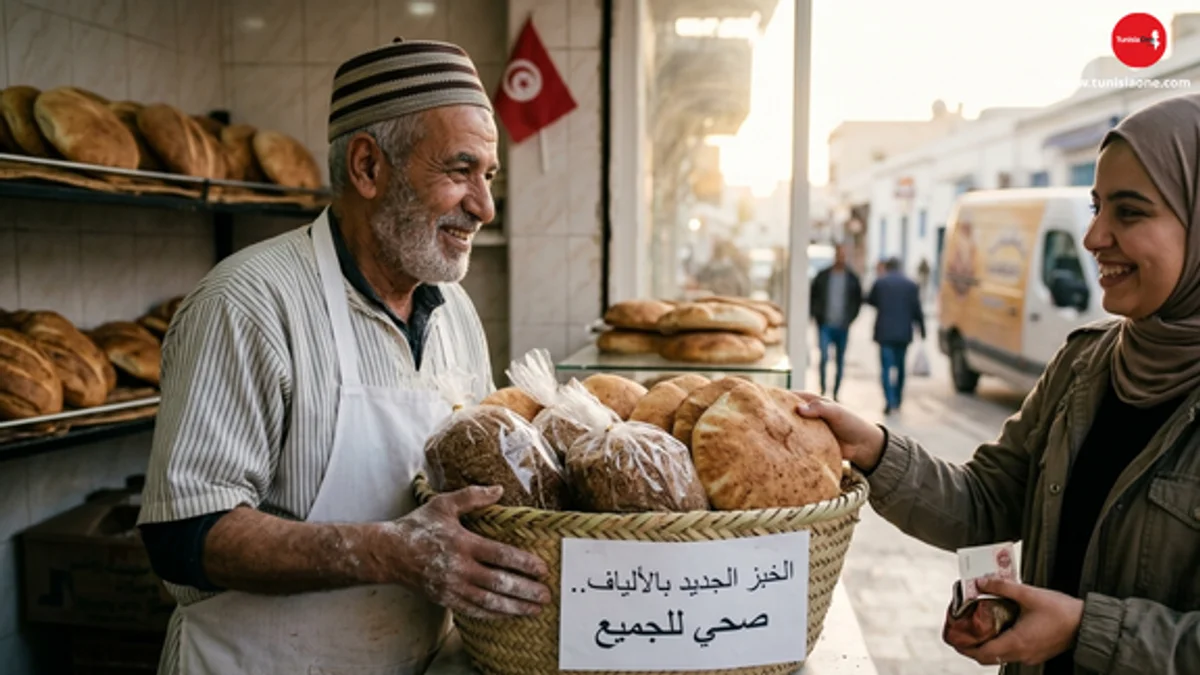
Tunis – Special Report
Tunisian authorities have finally ended the public debate regarding the future of bread subsidies by introducing “New Fiber-Rich Bread.” This strategic move shifts the focus from mere quantity to nutritional quality, marking a significant milestone in the country’s food policy amidst global economic challenges and inflation concerns.
Fixed Subsidies: A Social Guarantee
The Tunisian government, through statements by former Trade Ministry official Lassaad El Abidi, has reaffirmed its commitment to the subsidy system. For 2026, the strategic priority remains the stability of essential goods’ prices, particularly bread. Financial data indicates that massive budgets have been allocated for 2025 and 2026 to cover the cost differences, effectively silencing rumors about potential subsidy cuts or price hikes for basic food items.
The Fiber Revolution: Healthier Alternatives
The biggest surprise for consumers is that this “Healthier Bread,” rich in bran and fiber, will not cost more than the standard subsidized bread. The goal is to encourage Tunisians to adopt better dietary habits to prevent modern lifestyle diseases such as diabetes and obesity. Authorities emphasized that while the nutritional value has increased, the cost to the citizen remains unchanged, as the state continues to bridge the financial gap.
Why Now? Strategic Dimensions
This decision aligns with recommendations from nutritionists and the World Health Organization. Tunisians traditionally rely heavily on white flour products, which can lead to health issues over time. By providing a fiber-rich alternative, the state aims to reduce overall consumption—since fiber provides a faster feeling of fullness—and improve public health, potentially lowering long-term national healthcare costs.
Conclusion
The stability of prices for bread, milk, and fuel remains the cornerstone of daily living in Tunisia. By integrating healthy bread into the subsidy framework, the state is making a proactive move toward food security and public health, ensuring that the primary sustenance of its people remains affordable and high-quality.
Will the price of the new bread increase?
No, it remains at the same subsidized price.
What are the benefits?
Better digestion and lower risk of chronic diseases.