


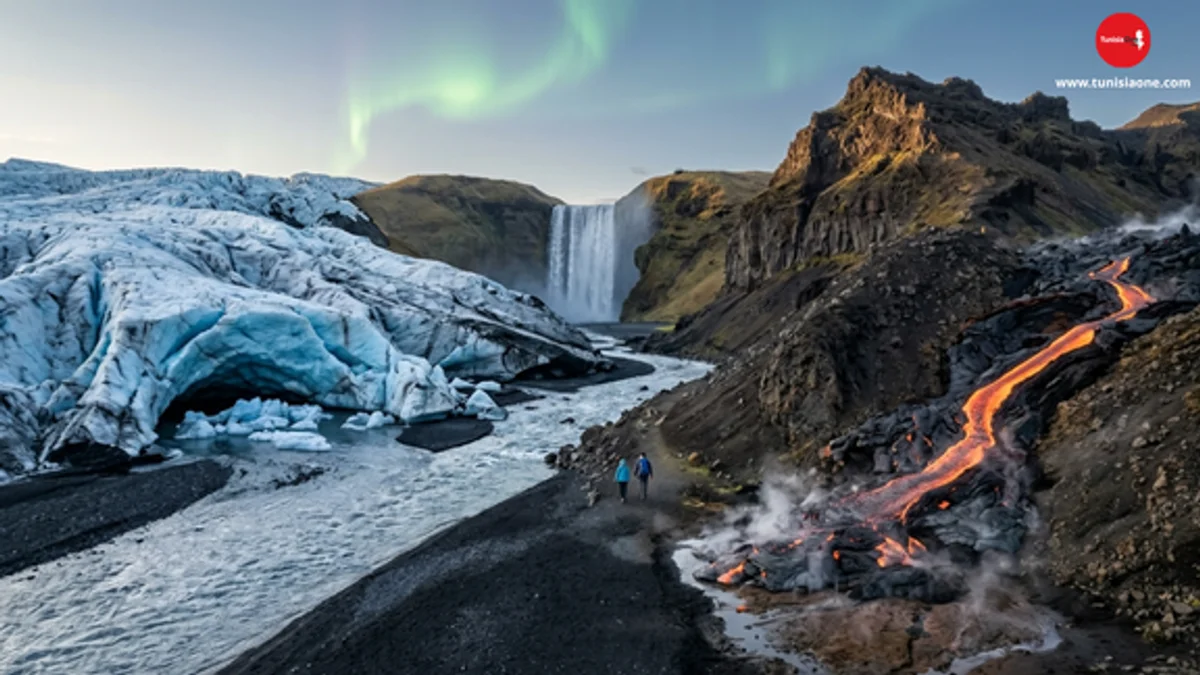
Iceland is a destination that defies expectations. Situated atop the Mid-Atlantic Ridge, it is a land where the Earth is literally being torn apart and rebuilt before your eyes. In 2026, Iceland remains at the forefront of global adventure travel, offering a unique blend of high-tech sustainability and ancient, untamed wilderness.
The Magic of the Golden Circle and the Highlands
Most travelers begin their journey with the Golden Circle, but for those seeking true isolation, the Highlands are the place to be. Accessible only during the summer months (June to September) via specialized 4×4 vehicles, the Highlands feature the rainbow-colored rhyolite mountains of Landmannalaugar. Here, you can hike through obsidian lava fields and soak in natural hot springs while surrounded by a landscape that looks like another planet.


Glaciers and Ice Caves: A Deep Blue Experience
Iceland is home to Vatnajökull, the largest glacier in Europe. One of the most sought-after experiences in 2026 is an ice cave tour. These “Crystal Caves” form naturally during the winter and offer a mesmerizing underworld of translucent blue ice. Because these caves melt and reform every year, no two visits are ever the same, making it a truly exclusive experience for every traveler.
Chasing the Northern Lights in 2026
The Northern Lights, or Aurora Borealis, are Iceland’s most famous nocturnal attraction. 2026 is an exceptional year for sightings due to the current solar cycle. To maximize your chances, head to the remote Westfjords or the northern town of Akureyri, where shorter daylight hours and clearer skies provide the perfect backdrop for the green and violet lights to dance across the horizon.
The Volcanic Pulse of the Peninsula
The Reykjanes Peninsula has become a global hotspot for “Volcanic Tourism.” Following the eruptions of recent years, organized trails have been established to allow visitors to witness the cooling lava fields safely. This dynamic landscape is a reminder of Iceland’s position as a volcanic powerhouse, where the heat from the Earth provides clean, geothermal energy to the entire nation.
Essential Travel Tips for 2026
- The Icelandic Weather: As the locals say, “If you don’t like the weather, wait five minutes.” Always pack waterproof layers, even in summer.
- Connectivity: Iceland has excellent 5G coverage, even in remote areas, making it easy to navigate using digital maps.
- Sustainable Travel: Always stay on marked paths to protect the fragile moss, which can take decades to recover if stepped on.
Do I need a 4×4 vehicle to travel around Iceland?
If you plan to stick to the main Ring Road (Route 1) during summer, a standard car is sufficient. However, for the Highlands (F-roads) or traveling during winter, a 4×4 vehicle is essential for safety and accessibility.
Is tap water safe to drink in Iceland?
Yes! Iceland has some of the cleanest and most delicious tap water in the world. It is safe, free, and eco-friendly to refill your reusable bottle everywhere.
What is the “Icelandic Pledge”?
It is an online agreement that visitors are encouraged to sign, promising to respect Iceland’s fragile nature, travel responsibly, and follow safety rules to preserve the island’s ecosystem for future generations.