


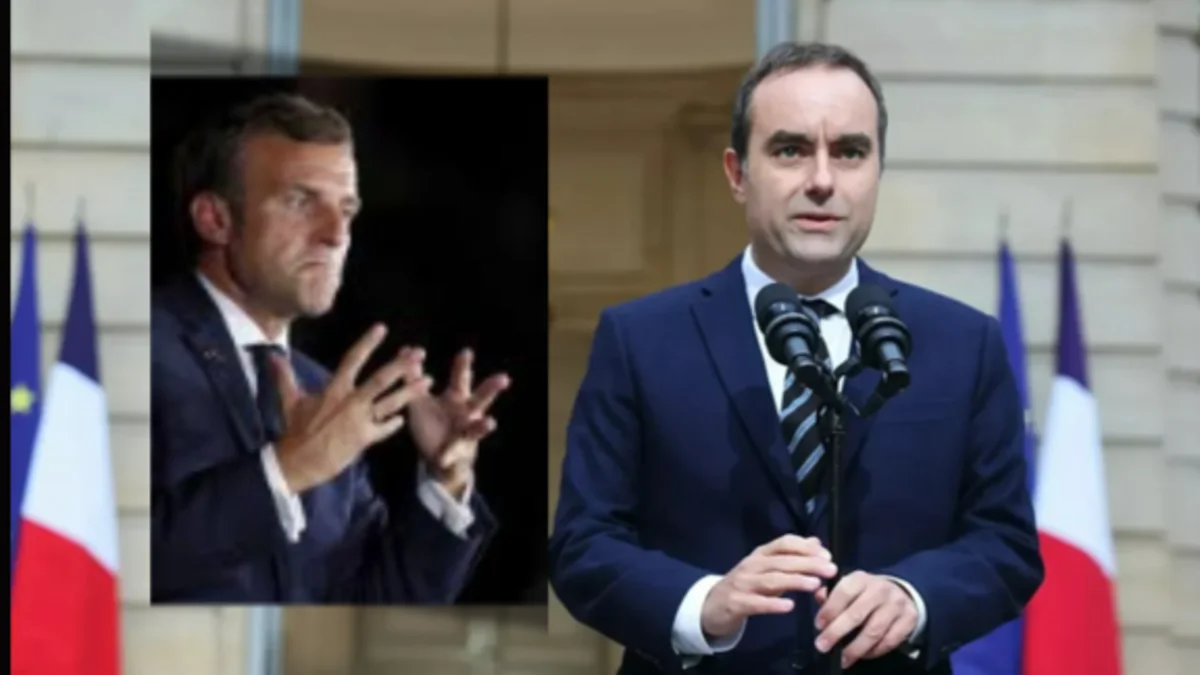
In a move that was not entirely unexpected given France’s charged political atmosphere, Prime Minister Sébastien Lecornu officially submitted his resignation to President Emmanuel Macron this Monday, October 6, 2025, which Macron accepted immediately. This resignation further deepens the political crisis the country has been facing since last year’s early legislative elections.
On Sunday evening, the Elysée Palace announced an ambitious new cabinet reshuffle in an attempt to stabilize the situation. However, the announcement met strong reservations, most notably from the right-wing “Les Républicains” party. They rejected the appointment of Bruno Le Maire as Minister of the Armed Forces, a shift from his previous role as Economy Minister. This early backlash signaled that the new government would have faced fierce and united opposition in a fractured Parliament.
مقالات ذات صلة / Related Posts

Challenges of a Divided Parliament Lecornu’s primary mission, like his predecessors, was to secure cross-party support to pass government bills, a daunting task with three rival parliamentary blocs opposing the executive branch. His failure to build bridges of consensus appears to have accelerated his resignation. The new government’s likely fate seemed to be a swift collapse, mirroring the short-lived administrations of François Bayrou and Michel Barnier, both of which fell due to opposition against austerity budget proposals.
In an effort to inject new blood and experience, Macron had brought back several former ministers while reshuffling key portfolios:
- Bruno Le Maire: Moved from Economy to Minister of the Armed Forces.
- Roland Lescure: Appointed Minister of Economy, tasked with the difficult mission of drafting the budget and managing complex austerity measures.
- Jean-Noël Barrot: Retained his position as Foreign Minister.
- Bruno Retailleau: Remained Interior Minister, reaffirming his commitment to prioritizing the fight against irregular migration.
Future Outlook: The Quest for Elusive Stability Lecornu’s resignation not only poses immediate challenges for Macron to find a Prime Minister capable of forming a parliamentary majority but also raises serious questions about the President’s own ability to govern effectively. The crisis triggered by last year’s snap elections, which Macron hoped would consolidate his power, has instead resulted in “legislative paralysis.”
The task for the next Prime Minister (expected to be named within hours) will be harder than ever. It is not just about forming a cabinet, but saving an ambitious reform plan and passing an inevitable austerity budget in the face of a motivated opposition ready to topple a third consecutive government. This confirms that France is navigating a profound political crisis that puts the future of economic and social reforms at stake.