


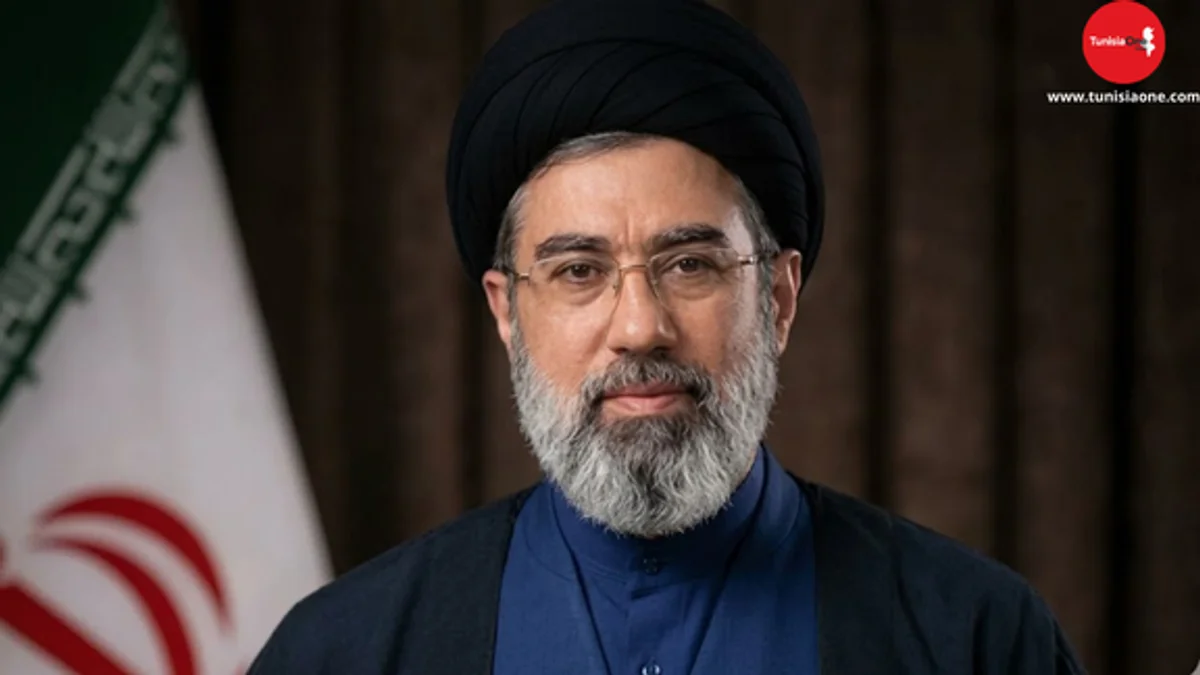
Tehran, the Iranian capital, is in a state of unprecedented security and political alert following the launch of joint military operations in early 2026. At the heart of this volatile situation, critical questions are emerging regarding the health of the man chosen to succeed his father at the pinnacle of power: the new Supreme Leader, Mojtaba Khamenei. International political circles were shaken by a report from CNN, citing informed sources, which confirmed that Mojtaba did not emerge unharmed from the initial airstrikes, opening the door to complex scenarios regarding the future of leadership and national stability in this pivotal phase.
Medical Report: Details of the New Supreme Leader’s Battlefield Injuries
Intelligence reports emanating from the decision-making corridors in Tehran indicate that Mojtaba Khamenei sustained direct physical injuries during the first wave of missile strikes targeting the fortified security perimeter where he was located in a secure bunker. Sources have detailed that he suffered a compound fracture to his foot, severe bruising in the area of his left eye, and minor facial lacerations caused by flying shrapnel and debris.
مقالات ذات صلة / Related Posts
 مجتبى خامنئي: تفاصيل الإصابة والحالة الصحية للمرشد الإيراني الجديد بعد قصف طهران
  Who is Ali Reza Arafi, Iran’s New Supreme Leader Known for His Hardline Stance?
  Libya: Conflicting Reports Over the Alleged Assassination of Saif al-Islam Gaddafi
  Randy George Fired & US Fighters Downed: Is Trump Trapped in the Iranian Quagmire?
Despite efforts by official media to characterize these injuries as “minor,” they were sufficient to cause his complete absence from the public eye at a historic moment when he was expected to deliver an “allegiance” speech or appear to reassure a populace reeling under the heavy bombardment.
The Airstrike: Was Mojtaba Targeted Along with His Father?
The most dramatic narrative came from Ali Reza Salarian, the Iranian Ambassador to Cyprus, in statements to the British newspaper “The Guardian.” He confirmed that Mojtaba was present at the exact geographical location targeted by the lethal airstrike that led to the assassination of his father, the former Supreme Leader Ali Khamenei.
Ruling Family Casualties in Tehran Strikes
The impact of that single strike was not limited to father and son; it also affected five other family members, raising major questions about the extent of the intelligence breach that allowed for the identification of such a highly sensitive family gathering place. In an unusually frank disclosure, Salarian clarified that the new Leader’s absence is purely for compelling medical reasons, explaining that his current physical condition does not allow him to stand before cameras or deliver a prolonged speech, a statement that reflects the magnitude of the medical suffering Mojtaba is enduring under these extraordinary circumstances.
Between Denial and Confirmation: Conflicting Narratives Over Khamenei’s Health
In an attempt to calm the public and prevent a collapse in military morale, Youssef Pezeshkian, son of Iranian President Masoud Pezeshkian, issued statements through the ISNA news agency. Youssef confirmed he had “heard” of Mojtaba’s injury but emphasized that his condition is stable and that he is “doing well, and there is no need for concern.”
However, military analysts argue that these types of statements lack tangible visual proof; in the political traditions of that region, public appearance is the only accepted currency to prove strength and actual control over state affairs. Mojtaba’s continued absence fuels rumors about the possibility of undeclared internal injuries or hemorrhage, or perhaps a state of profound neural and physical shock that prevents him from making critical decisions.
Repercussions of the Leader’s Absence on the Regional and International stage
Mojtaba Khamenei’s injury in his first days as Supreme Leader places the regime in a predicament of an “effective leadership vacuum.” While his name is being circulated as the legitimate Supreme Leader, the country is practically being managed by a small security council composed of top military commanders from the Revolutionary Guard. This fragile situation is what international powers seek to exploit by intensifying military and political pressure to impose a new reality.
This news remains the primary driver of global energy prices and geopolitical tensions in the Middle East, as regional stability is directly linked to the new Supreme Leader’s ability to reappear, assert control, and reunite domestic forces torn between grief over the previous leader’s departure and anxiety over the new leader’s health.