


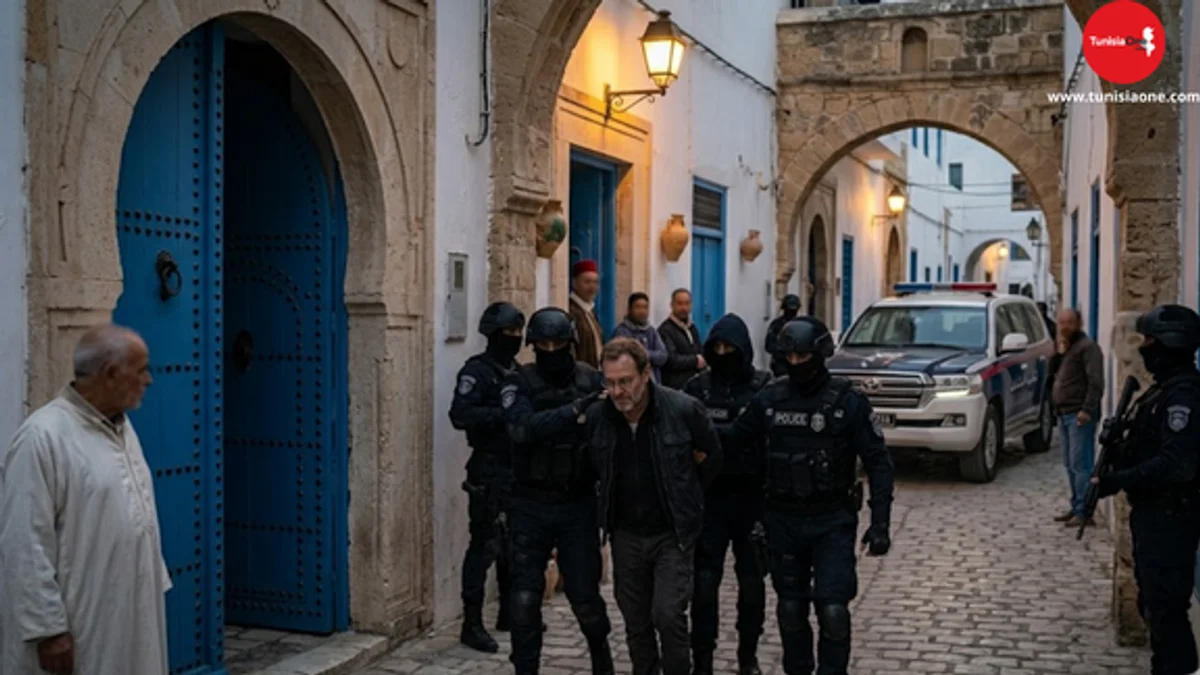
In a significant blow to international organized crime, Tunisian authorities have successfully apprehended Diego Boquiere, identified as one of the most dangerous fugitives associated with the Italian Mafia. The high-stakes operation, which follows weeks of complex intelligence gathering and cross-border cooperation, ended Boquiere’s three-month stint as a fugitive. The suspect had been hiding within Tunisian territory, attempting to evade the rigorous surveillance of European law enforcement agencies that had placed him on their high-priority watchlists.
Financial Forensics: How Investigators Traced the Fugitive’s Footsteps (H2)
The breakthrough that led to Boquiere’s hideout was not the result of a traditional manhunt or a random tip-off. Instead, it was a triumph of modern financial forensics and digital surveillance. Reports from Italian investigative journalists indicate that the “first thread” pulled by detectives was the tracking of suspicious financial trails used to sustain Boquiere’s life in hiding.
مقالات ذات صلة / Related Posts

Investigators in Italy meticulously monitored the movement of funds intended for the fugitive. Deep-dive financial analysis revealed that regular sums were being transferred to him through a web of intermediaries and bank accounts linked to his inner circle. This financial breach allowed security agencies to map his movements with surgical precision, pinpointing his exact location in Tunisia long before the tactical units moved in for the final arrest.
Tunisia’s Strategic Role in International Security Cooperation (H2)
This successful operation underscores the vigilance and growing capability of Tunisian security forces in handling transnational organized crime. Dealing with a high-profile criminal required a level of discretion and tactical precision that has garnered praise from international observers.
The arrest was executed with professional efficiency, neutralizing the target without collateral damage or public disturbance. For European security partners, this operation demonstrates that the southern Mediterranean is no longer a safe haven for fugitives, reflecting a significant evolution in the tactical coordination between North African and European intelligence services.
Impact on Mediterranean Mafia Networks and Future Investigations (H2)
The capture of Diego Boquiere is viewed as a major setback for his specific faction within the Italian Mafia. He was believed to play a pivotal role in managing external operations and securing escape routes for high-level associates.
With his custody in Tunisia, legal experts expect that ongoing interrogations will reveal further collaborators involved in providing logistical support, both in Italy and throughout transit countries. This case paves the way for even tighter security protocols between Tunisia and the European Union, aimed at draining the financial lifelines of organized crime syndicates attempting to establish a presence in the region.