


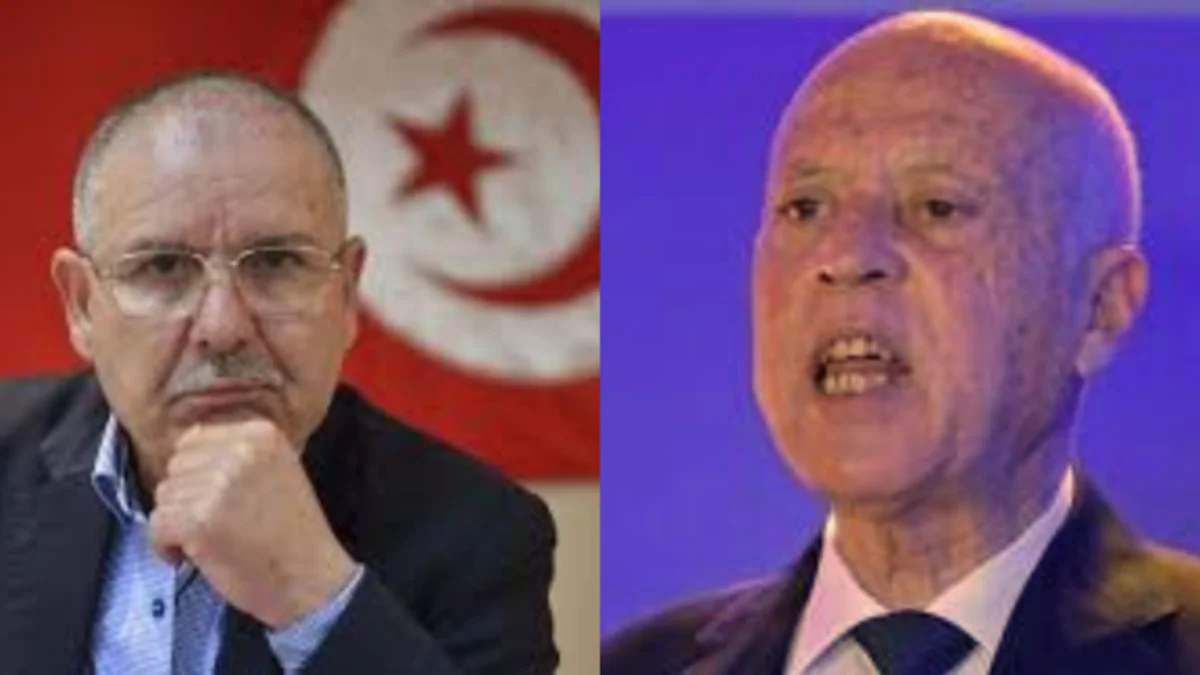
The arrest of Lassaad Yacoubi, a high-ranking official in the Tunisian General Labour Union (UGTT), on charges of “monopoly and speculation,” has ignited a fierce confrontation between the state and the nation’s most powerful social organization. While the authorities frame it as “upholding the law,” the union views it as a “political hit.” This clash marks a new escalatory phase in the relationship between President Kais Saied and the UGTT.
1. The State’s Stance: Rule of Law for All The official position emphasizes that no one is above the law.
مقالات ذات صلة / Related Posts


- No Immunity: President Saied has repeatedly stated his refusal to negotiate with those he labels as “corrupt.” The arrest is seen as a key move in a broader strategy to cleanse state institutions of deep-seated corruption networks.
- Addressing Economic Sabotage: By targeting hoarding and speculation in essential goods, the state aims to show it is actively defending citizens’ purchasing power against illegal price manipulation.
2. The Union’s Response: Fighting “Political Targeting” UGTT Secretary-General Noureddine Taboubi issued a sharp rebuke from the union’s headquarters:
- Allegations of Politicization: The union claims the arrest is a pre-calculated move to silence dissenting voices under the guise of anti-corruption efforts.
- Threat to Judicial Independence: Taboubi warned that the executive’s dominance over the judiciary threatens the very foundations of freedom and pluralism in Tunisia.
3. The Breaking Point: Union Overreach or Political Crackdown? This confrontation is a battle for legitimacy. The state must prove that its anti-corruption drive is evidence-based and legally sound, rather than a tool to erase the union’s political influence. Conversely, the UGTT must prove to the public that it does not shield corrupt members and that it welcomes transparency.